Games are not the point. How they connect people is.
We don't start with games. We start with the problem.
REMOTE WORKFORCE
For a remote workforce, the problem might be that significant investment has already gone into facilities and activities, but participation remains difficult. The question isn't what else to put on the calendar.
It's what stops people choosing to take part in the first place.
That leads us to things like choice, social barriers, limited free time, formats that build over time and making participation easy for the community to own.
HOSPITALITY
In hospitality, the problem is different. A venue can be full on Friday and Saturday and quiet on Tuesday and Wednesday. The opportunity isn't another one-off event.
It's creating a reason for people to choose that venue on a night they otherwise wouldn't.
That can mean recurring formats, seasons, leagues and communities designed to turn traditionally quiet trading periods into active ones.
ESTABLISHED BRANDS
For an established brand, the challenge can be different again. Awareness may already be enormous. The opportunity is to turn that recognition into participation. That could mean building a competition from local play through to a national championship, creating a programme that builds towards a major cultural event, or using recurring participation to put an established property back into people's lives.
The objective isn't an activation people see once. It's something they choose to join, follow and come back to.
Different problem. Different solution. Same approach.
- Understand the behaviour.
- Identify what needs to change.
- Design the right participation model around it.
- Determine what role games can play.
Two venues. Seven days a week. Around 500 events a year.
We know what it takes to get people to turn up, take part and come back, because we carry the cost when they don't.


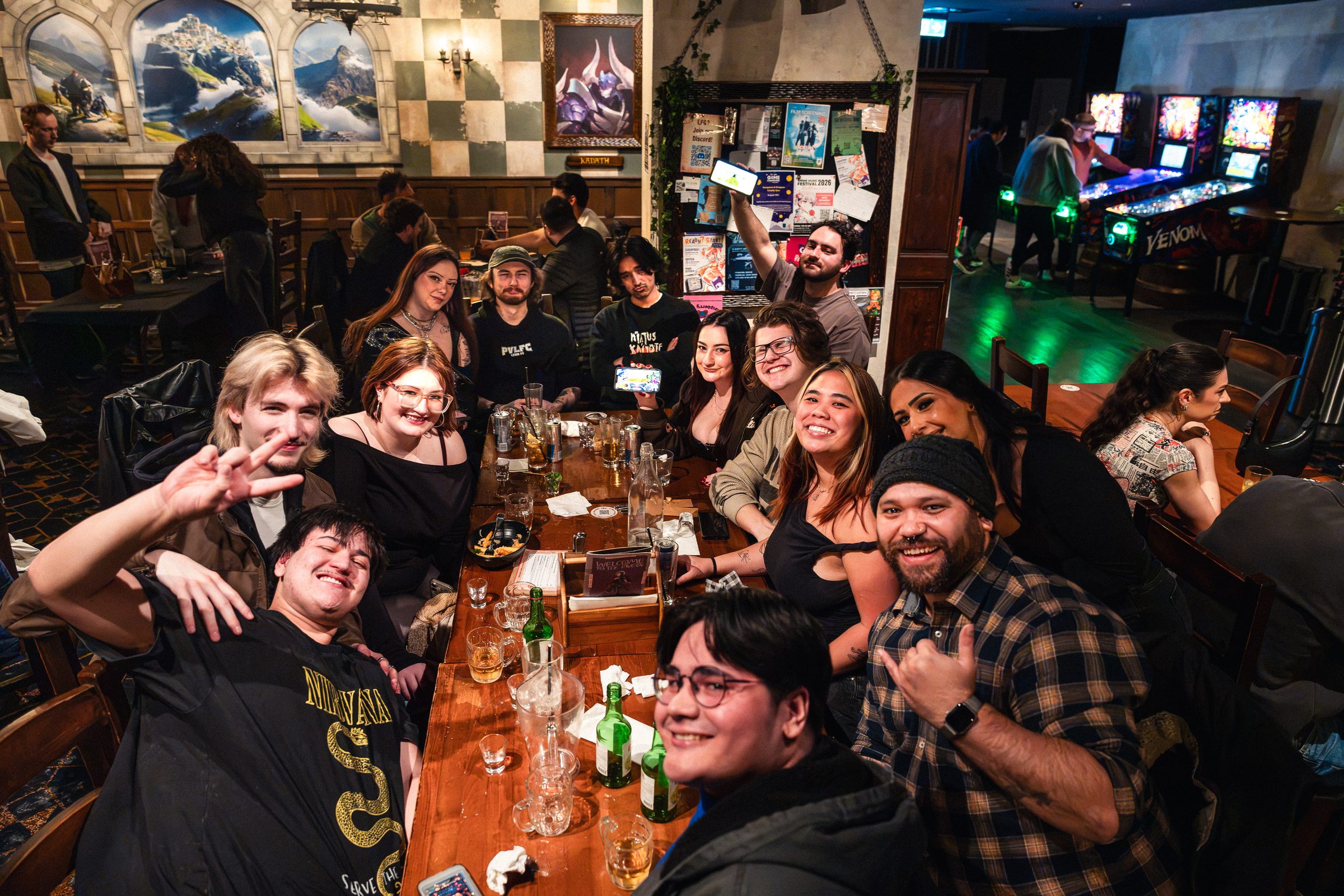
We're not going to tell you we understand your operation better than you do. What we bring is experience getting people to participate, and the discipline to prove an idea somewhere small before anyone scales it.
Start with one season, one programme or one or two locations. Agree what success looks like before we begin. Run it, measure it and learn. If it works, extend it.
Creating something people choose to participate in repeatedly is harder.
Depending on the problem, we might build a recurring programme, a competition or league, a championship around an existing brand or IP, a participation system across multiple locations, an experience within an existing space, or an ongoing managed service.
Behind that sits the wider Fortress capability: games and experiences, hosts and facilitators, community design, technology, production, creative capability, physical environments and the operating playbooks we use ourselves.
The solution might live in a pub, a student residence, a remote village, a Defence environment, an airport, around an established brand, or somewhere we haven't worked before.
We start with the outcome and assemble the parts the problem needs. Not the catalogue.
- How many people take part.
- How many come back unprompted. This is what starts to separate a system from an event.
- Movement in the experience, satisfaction or wellbeing measures you already collect.
- Whether people report greater connection with the people around them.
- For brands, whether participation builds momentum, repeat engagement and relevance around the property.
Where appropriate, we then look at how those measures relate to the commercial, brand or workforce outcomes you already track.
Fortress Games Pty Ltd · www.fortress.games
LinkedIn